Laser Hair Removal
Permanent Reduction, Not Just Temporary Results
Laser hair removal works by targeting the pigment within the hair follicle using a precise wavelength of light. This energy is converted into heat, which disrupts the follicle’s ability to produce future hair growth. Because the laser is highly selective for pigment, treatments can be carefully calibrated for different skin tones and hair types to ensure both safety and optimal results.
Hair grows in cycles, and laser treatment is only effective during the active growth phase. For this reason, a series of sessions is required to properly target each follicle at the right time. Over the course of treatment, hair growth is significantly reduced, leaving the skin smoother with minimal to no regrowth.
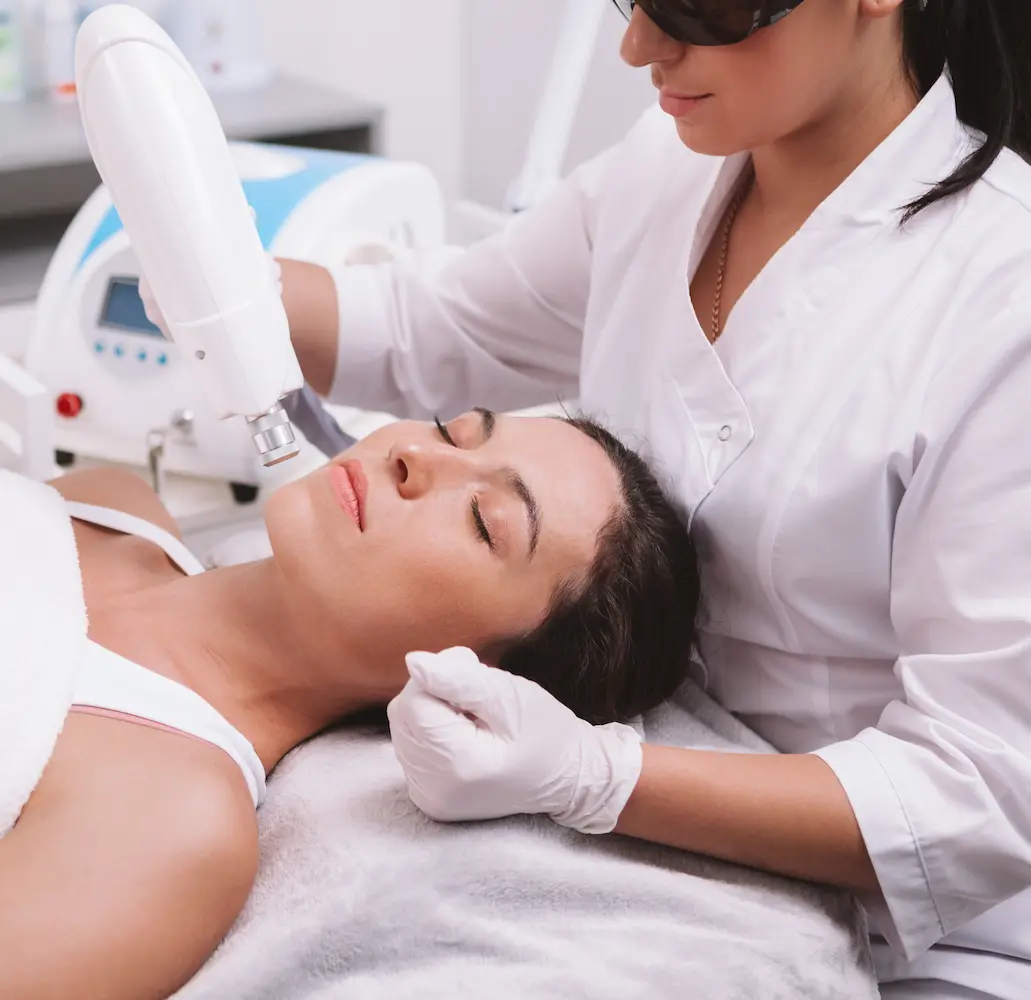
We offer two advanced treatment techniques depending on the area and level of precision required. The in-motion method allows the laser to glide continuously over the skin, delivering energy gradually and comfortably—this approach is often described as virtually pain-free and is ideal for larger areas. For smaller or more precise areas, a traditional stamping method may be used, delivering targeted pulses. This can create a mild snapping sensation, similar to a rubber band, but integrated cooling technology helps to significantly minimize any discomfort and protect the skin throughout the treatment.
Sessions are generally well tolerated and vary in length depending on the area being treated, from just a few minutes for smaller areas like the upper lip to around an hour for larger areas such as the legs or back.
How Many Sessions and What to Expect
Most patients need six to eight sessions to achieve significant permanent reduction, though this varies depending on the area being treated, your hair type, and your hormone levels. Coarser, darker hair responds most quickly. Finer hair or hair influenced by hormonal conditions may require more sessions or occasional maintenance.
In the days following treatment, the treated hairs will shed naturally over the course of one to three weeks. This can look like new growth at first, but the hairs are simply working their way out of the follicle. Avoiding sun exposure and heat in the first forty-eight hours after treatment supports the best outcome and minimizes the chance of temporary post-treatment changes in pigmentation.
Between sessions you should avoid any form of plucking, waxing, or threading that removes the hair from the follicle, as these methods remove the target the laser needs to work. Shaving is completely fine and is actually the preferred method of hair management during your treatment course.
Laser hair removal progressively eliminates unwanted hair over a series of treatments, saving time, reducing ingrowns, and delivering long-lasting smoothness.