
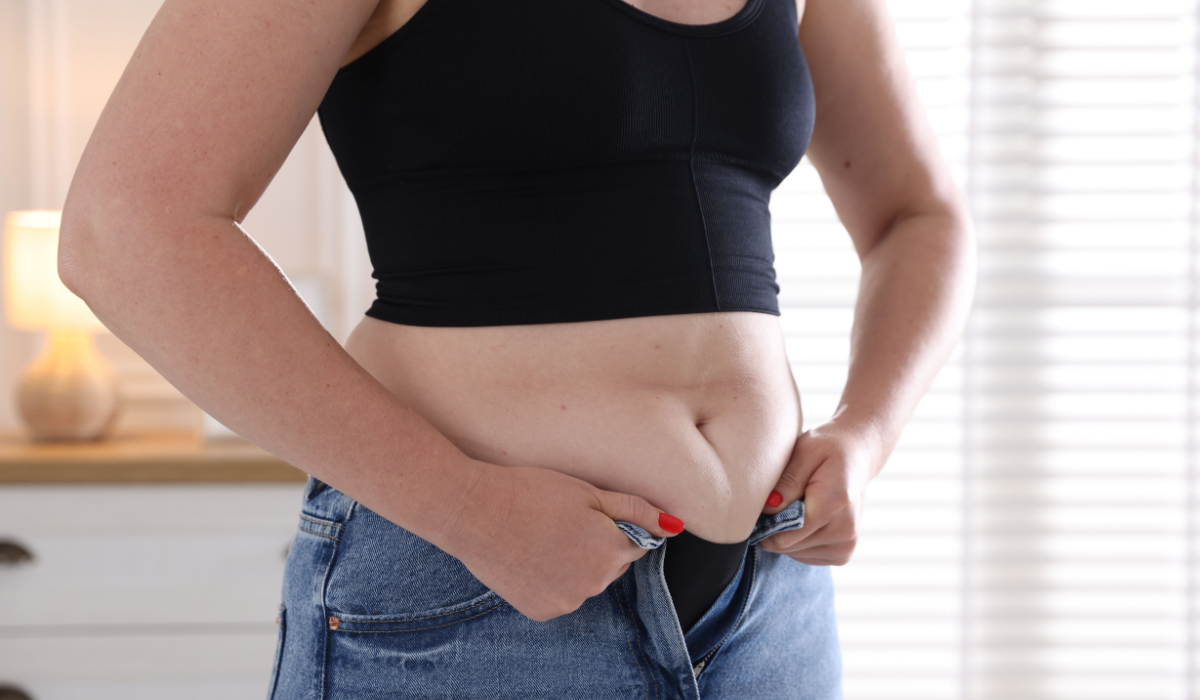
If you’ve been doing everything right and still can’t figure out why your midsection keeps expanding, I need you to look at something you probably haven’t considered.
Your to-do list.
I see this pattern constantly in women over 35. The same drive and productivity that helps you manage everything is also keeping your stress hormones elevated. And when cortisol stays high, your body starts storing fat exactly where you don’t want it.
Around your middle.
This isn’t just about how you look in clothes. Belly fat carries real health risks — heart disease, insulin resistance, type 2 diabetes. Your body is trying to tell you something important.
Here’s where things get more complicated. If you’re in perimenopause, your body becomes even more sensitive to stress. The hormonal changes happening make that stubborn belly fat harder to shift, no matter how clean you eat or how much you exercise.
It’s not because you’re not trying hard enough.
Your body is responding exactly the way it’s designed to when it’s under constant pressure.
Let me show you what’s really happening.
The Hidden Link Between Your To-Do List and Cortisol Belly
Your brain can’t tell the difference between a project deadline and a real emergency.
When you’re juggling an overloaded schedule, your body reads that mental pressure as danger. It doesn’t matter that you’re not being chased by a bear. Your hypothalamus activates your stress response system, signaling your adrenal glands to pump out cortisol. Work presentations, financial worries, relationship conflicts — your body treats them all the same way.
Here’s where things get frustrating.
Cortisol makes you hungrier, especially for high-calorie, sugary foods that feel more rewarding when you’re stressed. So you reach for the quick energy your body is demanding. But cortisol also tells your liver to produce more sugar while making your muscles less able to use that glucose effectively.
The result? All that unused sugar gets converted and stored as fat.
And your belly becomes the prime target.
Why Your Midsection Gets Hit the Hardest
This isn’t random biology working against you.
Abdominal fat contains way more cortisol receptors than fat anywhere else on your body. Women who carry more weight around their middle actually secrete significantly more cortisol when they’re stressed. It’s like your belly fat is designed to respond to stress hormones.
It gets worse. Visceral fat has elevated levels of an enzyme that converts inactive cortisone into active cortisol right in your midsection. So the fat around your belly is literally creating more of the hormone that caused it to accumulate in the first place.
It’s a cycle that feeds itself.
Sleep deprivation makes this whole process worse. When you’re not sleeping well, your cortisol pattern gets disrupted, causing levels to spike in the middle of the day instead of just in the morning. This sustained elevation keeps triggering fat storage exactly where you don’t want it.
And let me guess — you’re probably not sleeping great either.
Why Perimenopause Makes Stress Belly Fat Worse
Here’s where things get particularly frustrating.
Just when life starts throwing more at you, your body loses the hormonal support system that used to help you handle it.
During perimenopause, estrogen and progesterone begin to decline. These weren’t just reproductive hormones. They were also your stress buffers. When they drop, serotonin levels fall with them, which explains why you might feel more irritable, anxious, or on edge than you used to.
Progesterone, especially, acted like a natural brake on your stress response. Without it, cortisol has less opposition. The result? Your stress hormones become more erratic and spike more easily.
Sleep becomes another casualty. Hot flashes and night sweats fragment your sleep, which increases bedtime cortisol by 27% and disrupts the healthy morning surge your body needs. Up to 60% of women report significant sleep disturbance during this transition.
This creates what I call the perimenopause stress spiral.
Lower progesterone leads to higher cortisol. Higher cortisol makes it harder for progesterone to do its job. The cycle feeds itself.
And here’s the part that makes belly fat so stubborn during this time. Declining estrogen shifts where your body prefers to store fat. Instead of hips and thighs, it now favors your abdomen. Add the cortisol elevation on top of that, and you have a perfect storm for midsection weight gain.
Early perimenopause is often when this hits hardest. Stress levels peak, and up to half of women report depression or anxiety symptoms during this stage.
Your body isn’t betraying you. It’s trying to adapt to a major hormonal transition while still managing all the external pressures that haven’t slowed down.
But understanding why this happens gives us a roadmap for what actually works.
What Actually Works to Reduce Stress Belly Fat During Perimenopause
Let’s be clear about what doesn’t work first.
Hormone therapy won’t solve your stress belly fat problem. Studies show it doesn’t cause weight gain, but it also isn’t the magic solution for losing perimenopause belly fat. Weight loss medications might seem tempting, but they come with troublesome side effects like nausea and diarrhea, most people can’t afford them, and you’ll likely regain the weight once you stop.
The real solution starts with understanding that your body is responding to stress, not rebelling against you.
Here’s what actually works.
Feed Your Body for Stability, Not Restriction
Your body needs consistent fuel, especially when it’s already dealing with hormonal changes.
The Mediterranean approach works because it supports your nervous system instead of stressing it further. This means whole foods rich in fiber and antioxidants, while limiting the sugar and processed foods that send your blood sugar on a roller coaster.
Protein becomes even more important during perimenopause. Aim for about 1.0 to 1.2 grams per kilogram of body weight daily. For a 150-pound woman, that’s roughly 68 to 81 grams daily. This isn’t about complicated meal plans. It’s about giving your body the building blocks it needs to stay stable.
Move Your Body in Ways That Support, Not Deplete
Here’s where many women go wrong. They think more intense exercise will force their body to cooperate.
But if your body is already stressed, adding more stress through punishing workouts often backfires.
You need 150 minutes of moderate-intensity movement and two days of strength training per week. Weight-bearing exercises that focus on core strength directly address where hormonal changes cause fat to accumulate. Resistance training helps you build muscle that naturally burns more calories at rest.
The key is choosing movement that energizes you rather than leaves you completely depleted.
Prioritize Sleep Like Your Health Depends on It
Because it does.
Seven to nine hours nightly. Poor sleep keeps cortisol elevated and disrupts the hunger hormones that tell you when you’re actually hungry or full.
And no, you can’t out-discipline poor sleep. Your body needs this time to regulate, repair, and reset your stress response.
The Real Solution Addresses the Root Cause
This isn’t about perfecting your diet or finding the ideal workout routine.
It’s about creating the conditions where your body feels safe enough to let go of what it’s been holding onto. When your nervous system isn’t constantly in survival mode, your hormones can start to rebalance, and your body stops fighting you on weight.
You don’t need expensive medications or perfect protocols. You need to support your body through this transition instead of pushing it harder.
Because when your body feels supported, it stops pushing back.
Your Body Was Never the Problem
Your packed schedule really is connected to your belly fat.
And yes, perimenopause makes it harder by removing the hormonal buffer that once helped you handle constant stress.
But here’s what I want you to understand. Your body isn’t broken. It isn’t refusing to cooperate out of stubbornness. It’s been protecting you the only way it knows how.
When you address what’s actually driving the problem — the elevated cortisol from chronic stress — everything starts to shift. Your body stops holding on so tightly. The weight that felt impossible to lose becomes manageable again.
You don’t need expensive medications or complex protocols.
You need to work with your body’s design instead of against it.
When your nervous system feels supported, when your hormones have the foundation they need to function properly, your body becomes willing to let go of what it’s been storing.
Because it finally feels safe to.
That stubborn belly fat isn’t a reflection of your worth or your effort. It’s feedback about what your body needs.
And once you give it that support, you might be surprised how quickly things can change.
Key Takeaways
Understanding the connection between chronic stress and belly fat can help you address the root cause rather than just symptoms. Here are the essential insights for managing stress-related weight gain during perimenopause:
- Chronic stress from overloaded schedules elevates cortisol, which specifically targets abdominal fat storage through higher cortisol receptors in belly fat
- Perimenopause removes your hormonal stress buffer as declining estrogen and progesterone make your body more sensitive to stress and shift fat storage to your midsection
- Mediterranean diet with adequate protein (1.0-1.2g per kg body weight) plus 150 minutes weekly exercise and resistance training effectively combat stress belly fat
- Prioritizing 7-9 hours of quality sleep is non-negotiable as poor sleep keeps cortisol elevated and disrupts hunger hormones that regulate appetite
The solution isn’t expensive medications or hormone therapy alone, but addressing lifestyle factors that directly impact your stress response and metabolism. By managing your cortisol levels through nutrition, exercise, and sleep, you can break the cycle of stress-induced belly fat accumulation that becomes more challenging during perimenopause.